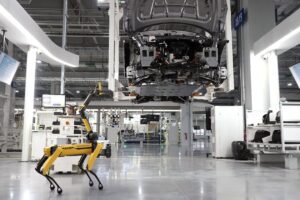
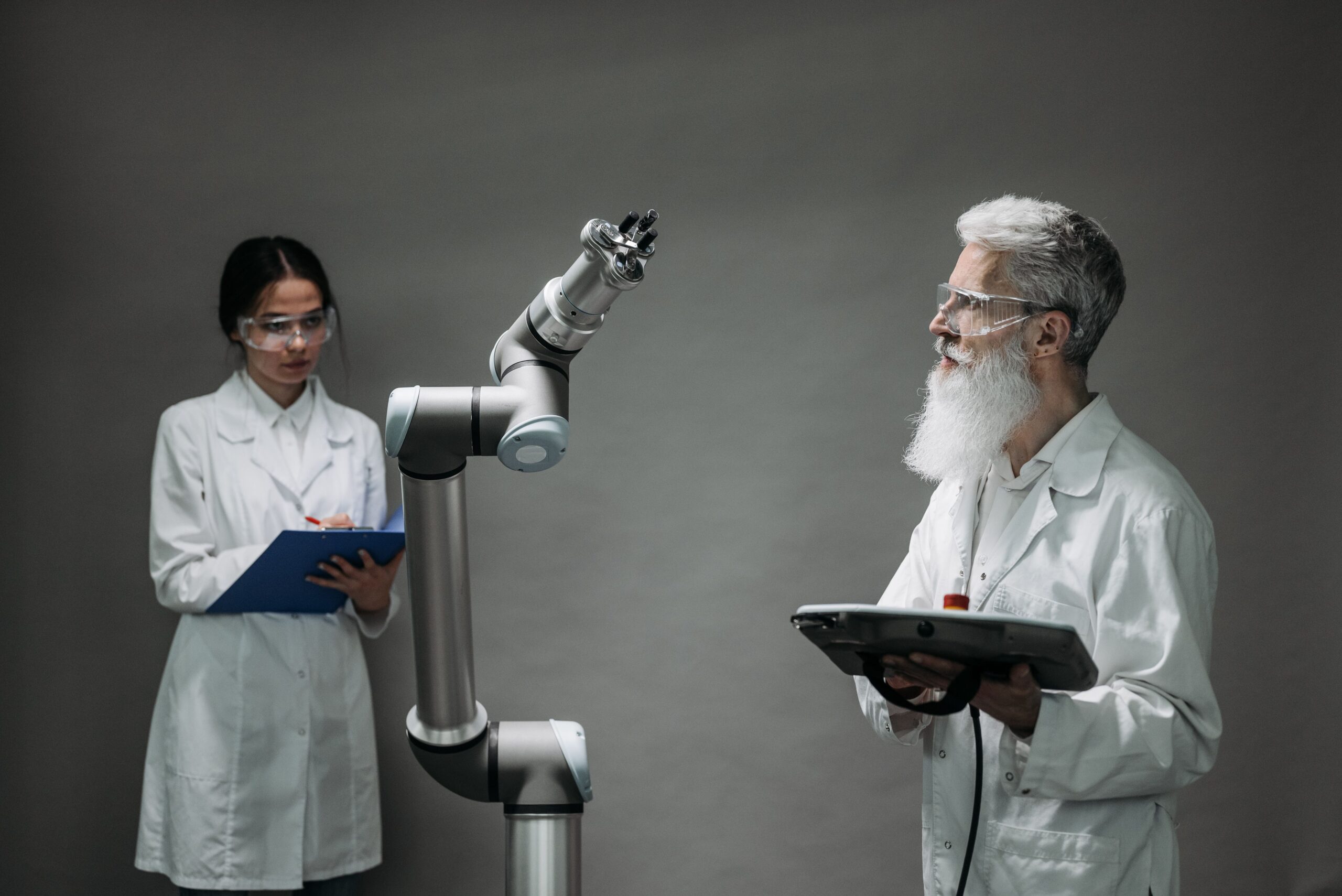
A robot teleoperation system Singapore research labs and manufacturers choose today is no longer just a way to drive a robot from a distance. It has become the main tool for collecting the demonstration data that modern robot learning depends on. Embodied AI is moving fast in Singapore, with new national programmes and research projects pushing robots from labs into factories, and every one of them runs into the same bottleneck: good demonstration data is slow and costly to collect. A robot teleoperation system Singapore teams can set up quickly turns a skilled operator’s movements into training data, instead of waiting months for custom hardware.
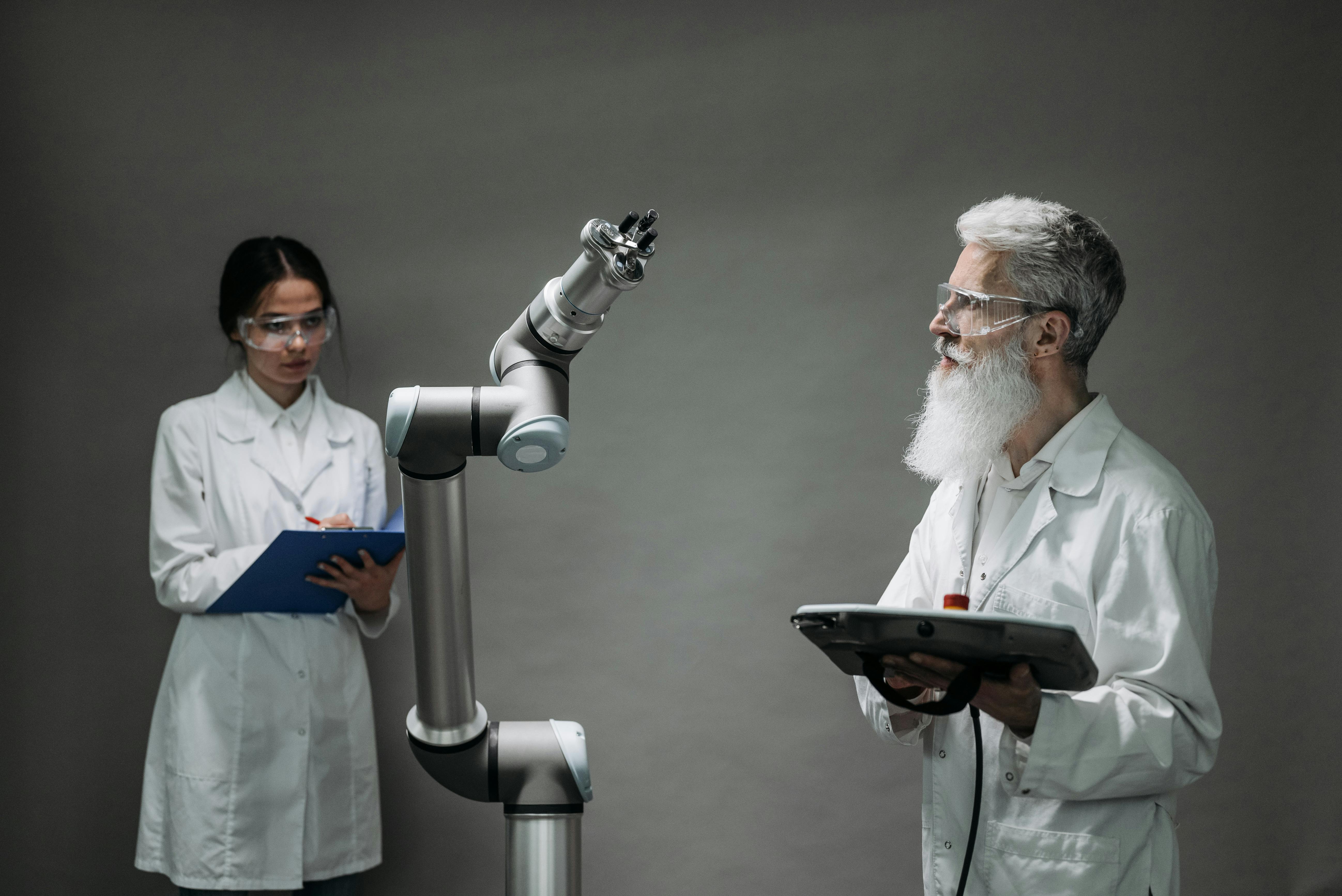
Photo: Pavel Danilyuk / Pexels
Why a Robot Teleoperation System Singapore Teams Need Is a Growing Priority
In October 2026, the National Robotics Programme, A*STAR, PINE Lab@NTU, and Micron Technology launched the Singapore Embodied AI Challenge for Manufacturing, which TNGlobal reported as the country’s first national competition dedicated to embodied AI and robotics through real-world industry challenges. Earlier in the year, a CNRS@CREATE project on embodied AI for human-robot collaborative task execution began, coordinated with the National Robotics Programme and involving researchers from NTU, NUS, and SMU, with a run from January 2026 to December 2029.
These programmes need robots that can do useful physical work. Teaching a robot by demonstration means someone has to demonstrate, many times, in a form the learning pipeline can use. That is where teleoperation comes in.
5 Proven Ways a Robot Teleoperation System Singapore Labs Use Fixes the Data Bottleneck
1. It captures hand motion with fine detail
Collie offers LinkerGloves, motion capture gloves with 18-point bend curvature tracking and integrated vibrotactile haptics, with millisecond tactile feedback. Fine finger detail matters for dexterous tasks, because a demonstration that loses finger motion teaches the robot less.
2. It synchronises the whole upper body
For tasks that involve arms, shoulders, and reach, the Half-body MoCap is described as an ergonomic counterbalance teleoperation tracking rig for upper-body kinematic synchronisation. A counterbalanced rig also helps reduce operator fatigue during long collection sessions.
3. It comes as a ready workstation
Building a teleoperation setup from scratch consumes engineer time. The Data Collection Kit is described as a turnkey dual teleoperation station, a complete master-slave workstation for collecting high-fidelity demonstration datasets for AI foundation models. Starting from a working station shortens the time from purchase to first dataset.
4. It feeds learning pipelines directly
According to Collie, the LinkerGloves and Data Collection Workstation capture synchronous high-frequency operator kinematics and haptic tele-presence, and the demonstration trajectories feed into imitation learning pipelines and VLA foundation models without format conversion. Test this with your own pipeline, because compatibility depends on your toolchain.
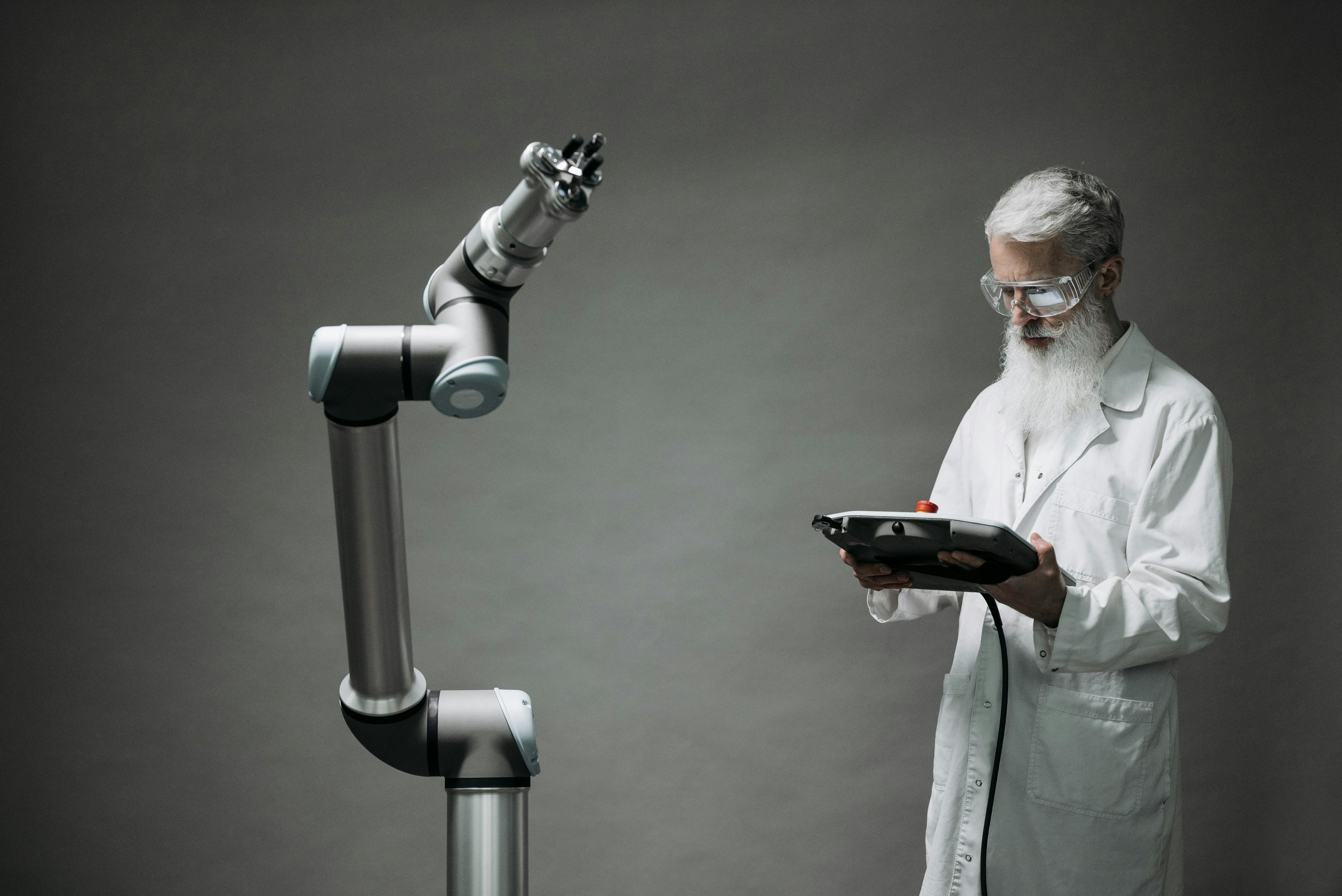
Photo: Pavel Danilyuk / Pexels
5. It works across robot bodies and has local support
Collie states that Linker units use universal mechanical flange mounts, native ROS 2 Humble and Iron packages, and standard URDF, MuJoCo, and Isaac Gym assets, and that they mount onto Collie quadrupeds, LimX platforms, Casbot and Fourier GR-1 humanoids, and traditional cobot arms. Each unit comes with a one-year enterprise hardware warranty, lifetime SDK and firmware updates, engineer-to-engineer support, and replacement logistics through a Singapore dispatch hub. See the full Linkerbot page for the range.
Matching the Hand to the Task
The control side is only half of the system. Collie’s Linker Hand series spans from the 6-DOF Model 06 and the industrial L6 to the 20-DOF L20, listed as teleop-ready and calibrated for foundation model imitation learning, and the 30-DOF L30 flagship with a 1 kHz sensory bandwidth. Our guide to a robot hand for Singapore industry compares the models, and the robotic arm guide covers fixed-station automation.
What to Check Before Buying a Robot Teleoperation System Singapore Buyers Compare
- Latency: delay between operator and robot affects both control feel and data quality, so measure it on your own robot.
- Feedback: haptic or tactile feedback helps operators perform delicate tasks, so ask what is available.
- Operator comfort: sessions are long, so ergonomics matters for consistent data.
- Robot compatibility: confirm mounts, drivers, and software for your exact robot and framework.
- Data format and tooling: check what is recorded, at what rate, and how it connects to your training stack.
- Safety: make sure there are emergency stops and limits when a person drives a powerful machine remotely.
- Data governance: decide who owns demonstrations and how they are stored, especially when they capture factory processes.
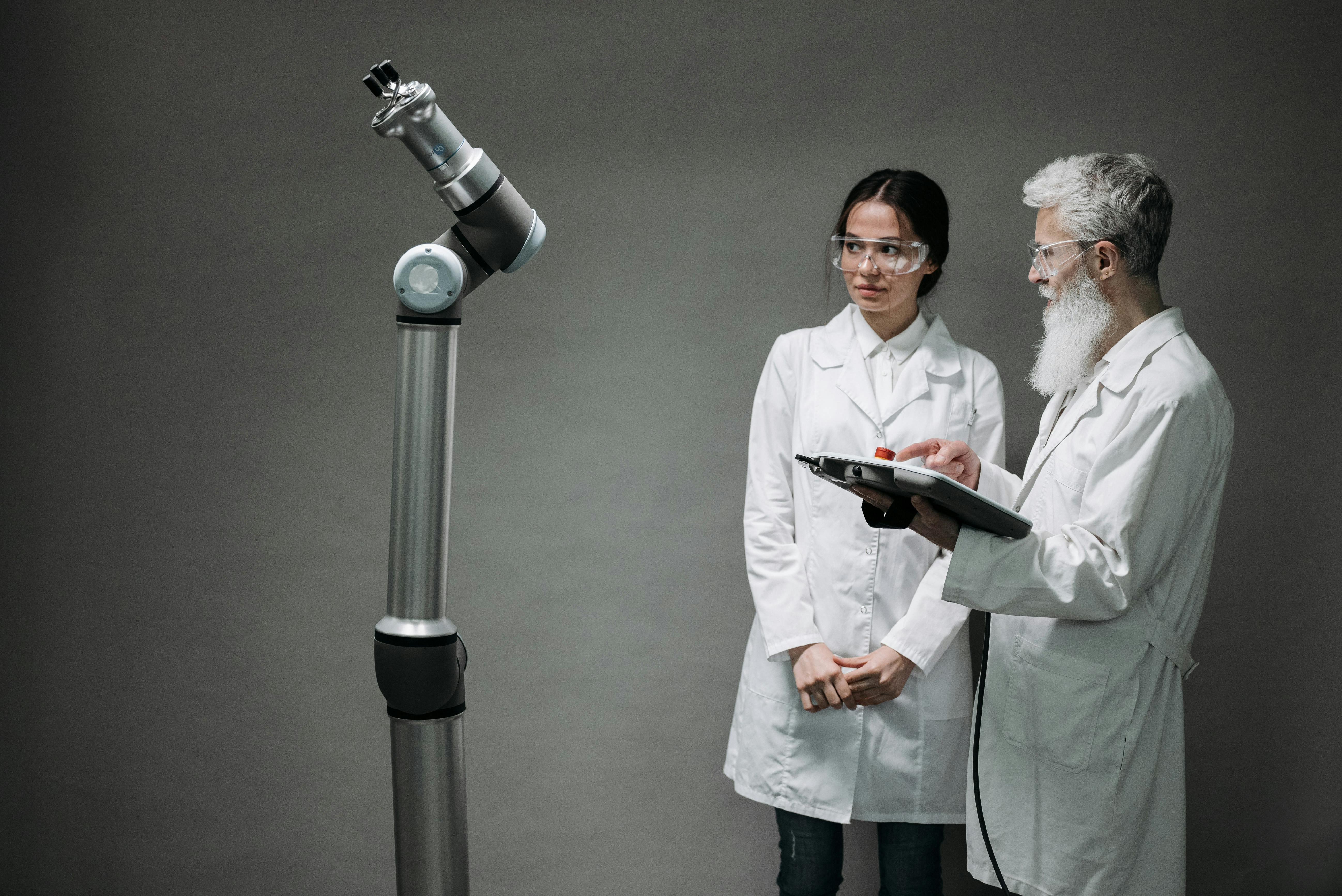
Photo: Pavel Danilyuk / Pexels
Who Benefits Most
- Universities and research institutes: teams running imitation learning and foundation model projects. See Collie for education and its campus deployments.
- Manufacturers: factories preparing robots for new assembly or handling tasks, including those looking at industrial sites automation.
- Robotics start-ups: teams that need data quickly without building every tool from scratch.
- Humanoid and robot-body developers: companies that need a dexterous hand and a data pipeline together, including those building on LimX or Casbot platforms.
Frequently Asked Questions
What is teleoperation used for in robot learning?
A person controls the robot to perform a task, and the movements are recorded as demonstrations. A learning model then uses many demonstrations to learn the behaviour.
Do I need a humanoid robot to use a teleoperation kit?
No. Teleoperation works with arms, hands, and several robot bodies. Check compatibility with your platform.
How much data do I need?
It varies by task and method. Start with a small pilot to see how many demonstrations your task needs before scaling up.
Plan a Pilot Data-Collection Project
Choose one manipulation task, define what a good demonstration looks like, and run a small pilot before committing to a full programme. Speak with the Collie team about a robot teleoperation system Singapore researchers and manufacturers can pilot, including gloves, rigs, hands, and integration with your robot.
Explore Linkerbot teleoperation and hands →
See the full Collie robot fleet →