A self check-in kiosk Singapore hotels deploy tackles two pressures at once: more visitors arriving and fewer hands at the front desk. International visitor arrivals reached 16.9 million in 2025, according to figures from the Singapore Tourism Board reported by industry media, with 17 to 18 million projected for 2026. The same reports note that the accommodation sector continues to face manpower constraints. A self check-in kiosk Singapore properties can rely on shifts routine registration to the guest, so the team can focus on service, but only if the kiosk captures guest identity correctly and meets the legal record-keeping duties every hotel carries.
Photo: Yizi Zeng / Pexels
Why a Self Check-In Kiosk Singapore Hotels Choose Is Now a Productivity Tool
Digital check-in is part of the national hospitality agenda. In a speech at Hospitality Exchange 2025, Minister of State Alvin Tan cited digital check-in and check-out among the productivity examples for hotels, including a group that replaced traditional front desks with mobile systems. A kiosk is the in-lobby version of the same idea, and it suits properties where many guests still prefer a physical point of contact.
5 Proven Fixes a Self Check-In Kiosk Singapore Properties Use for the Labour Crunch
1. Faster arrivals at peak times
When a tour group or flight wave arrives together, a single desk becomes the bottleneck. Several guests can register on kiosks at once, and staff step in only for exceptions.
2. Accurate identity capture from the passport
The kiosk should read the document, not ask the guest to type it. Sinosecu offers an ultra-slim kiosk passport reader, the TH-SR190, and embedded readers in its KR160, KR420, and KR530 series with USB interfaces and SDK support, designed to be built into self-service machines. They extract data from passports and other travel documents using OCR and machine-readable-zone reading under ICAO 9303.
3. One machine for many nationalities
Sinosecu states that its readers recognise more than 80 document types and passports from more than 200 countries, so a kiosk can serve guests from different markets without separate procedures.
4. Optional face matching and document checks
For properties that want an extra layer, Sinosecu’s ID Face Reader line combines document reading with face recognition, and its passport authenticity system checks documents through optical inspection, chip inspection, and ultraviolet anti-counterfeit points. Whether to add these depends on your risk and guest experience goals.
5. Staff time moves to service
Typing passport details is low-value work. Removing it lets staff spend time on upsells, local advice, and problem solving, which is where a hotel’s reputation is made.
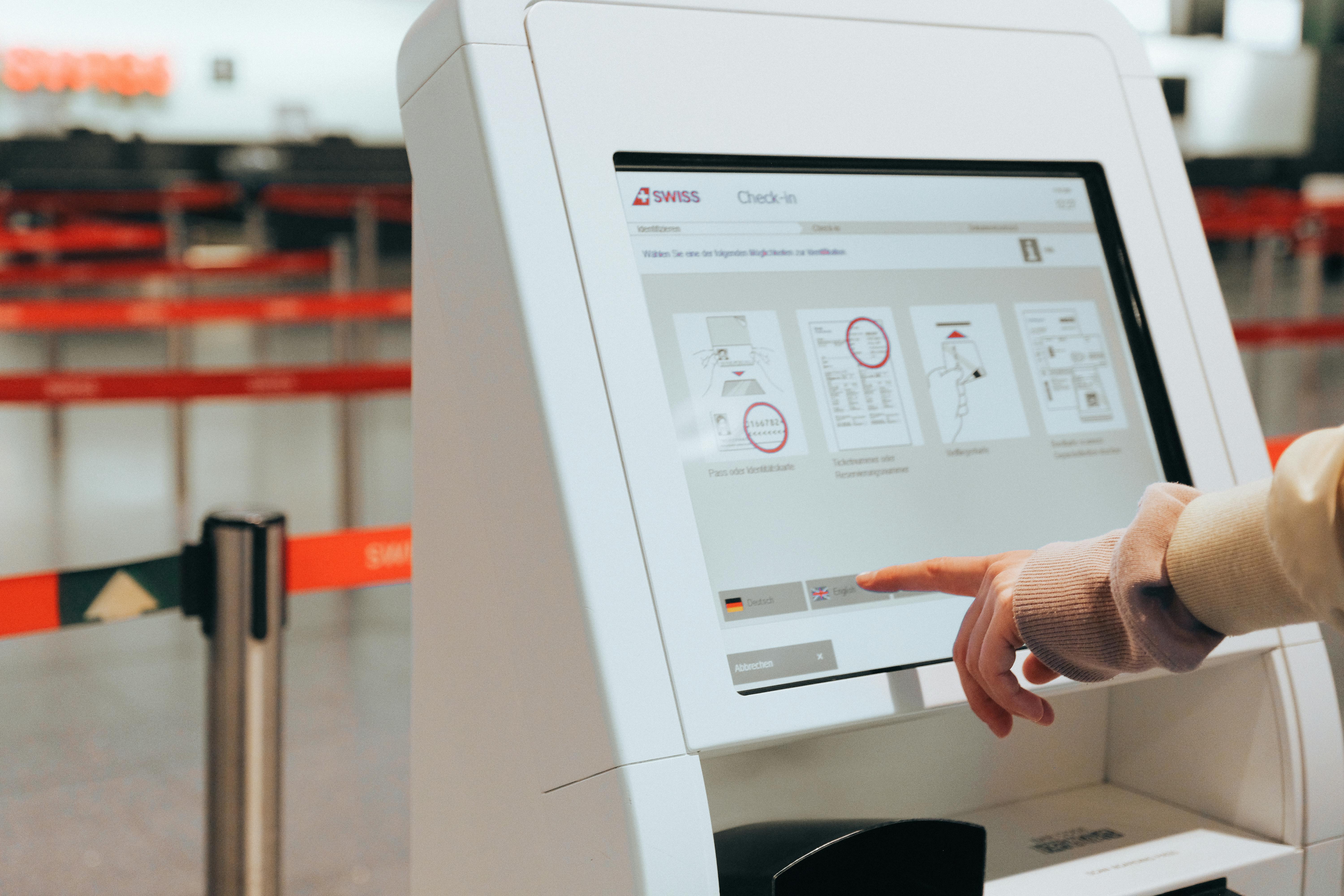
Photo: Anna Shvets / Pexels
Legal Duties a Self Check-In Kiosk Singapore Hotels Use Must Still Meet
Automation does not remove the hotel’s obligations. Under the Hotels Licensing (Amendment) Regulations 2017, a licensee must require guests to furnish particulars, including full name, nationality, and the identification number of an identity card, passport, or other travel or personal identification document, before they occupy a room. The licensee must keep a record, have the entry acknowledged (for example by signature or thumbprint), and retain it for at least five years. Regulations can change, so confirm the current text. In practice, a kiosk workflow needs:
- A step that captures the required particulars before a key is issued.
- A way for the guest to acknowledge the record, such as an on-screen signature.
- Secure storage that meets the retention period.
- A fallback to the front desk if the kiosk cannot read a document.
Privacy and Security at the Kiosk
A kiosk is a public device holding personal data. Follow the guidance of the Personal Data Protection Commission: collect only what you need, tell guests why, restrict access to records, and set a retention period. Position screens so others cannot read them, clear data from the device after each session, and keep the scanner glass clean and tamper-evident.
What to Check Before Buying a Self Check-In Kiosk Singapore Operators Will Trust
- PMS integration: ask for a live demonstration with your property management system.
- Reader quality: test with worn, laminated, and foreign-script passports.
- Key encoding or mobile key: confirm how the kiosk issues access.
- Accessibility: screen height, language options, and assisted mode.
- Uptime and support: a dead kiosk during arrivals sends guests back to the desk.
- Data location: ask where data is stored and processed.

Photo: Andrea Piacquadio / Pexels
Frequently Asked Questions
Do guests still need to see staff?
Often no, but keep a staffed option for guests who need help, have unusual documents, or prefer personal service.
Can a kiosk read Singapore documents as well as foreign passports?
Sinosecu lists support for the Singapore ID card and driving licence in its ID document OCR, alongside passports. Test the exact documents you expect to handle.
Is a kiosk worthwhile for a small hotel?
It can be, particularly where a single person covers the desk and late arrivals are common. Compare the cost with the staff time and errors it removes.
Go Deeper on Guest Identity Capture
If you are still choosing a reader for the front desk, see our guide to a passport scanner for Singapore hotels, and our guide to a work permit scanner for worker registration. Explore the full range on the official Sinosecu website.
Pilot a Kiosk at Your Busiest Hour
Measure check-in time and error rates now, then compare after a pilot. Speak with the Collie team about a self check-in kiosk Singapore hotels can pilot, including passport reader selection and integration with your guest registration workflow.
Explore visitor and guest management →
See Collie access control →