As a construction site manager, you’re probably all too familiar with the
Use Cases · IoT Sensors
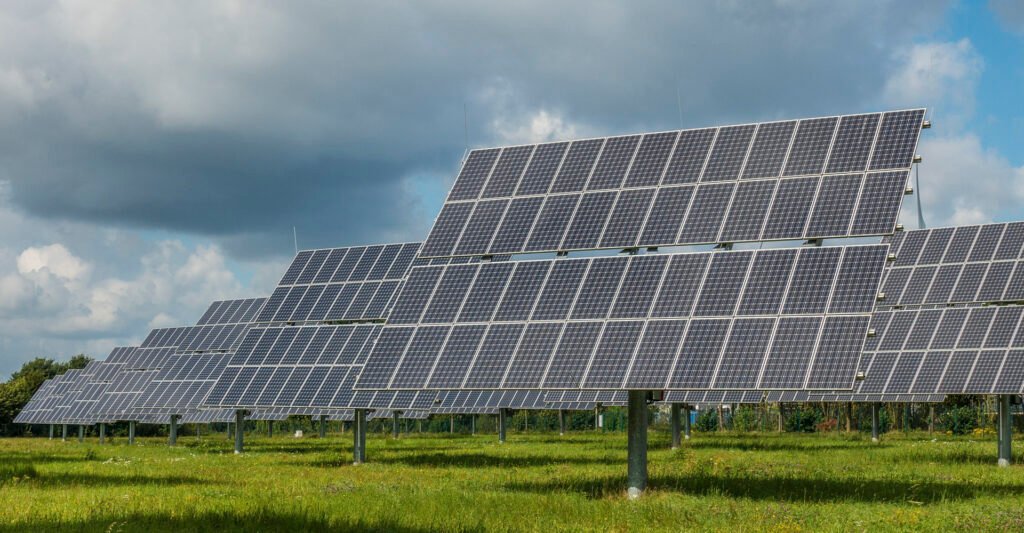
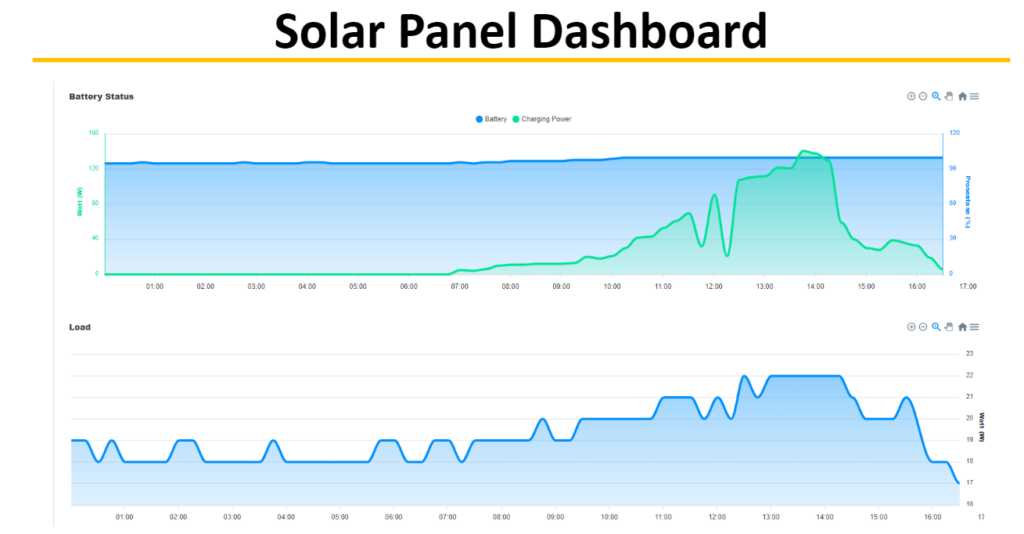
A solar array can lose output for weeks before anyone notices — a shaded string, a failing inverter, a box quietly underperforming. Collie’s dashboard tracks production down to the individual panel, so a dip gets caught the day it starts, not the quarter it shows up in the bill.
Why it matters
Solar underperformance rarely fails loudly. It just produces a little less every day, until someone finally compares the bill to the forecast.
Dust, shading, and ageing cells reduce output gradually — nothing dramatic enough to trigger a manual inspection on its own.
Without panel-level data, a site only sees the combined number — never which specific panel or box is dragging the average down.
Sending someone to physically inspect every panel across a large roof or field is slow, and it only checks whatever day someone shows up.
What’s inside
The dashboard zooms from a single total-output number all the way down to the specific panel that needs attention.
Live and historical kWh output, peak power, and efficiency, tracked continuously against expected generation.
Every panel or string in the array, listed with its current status — producing normally, underperforming, or offline.
Drill into a single combiner box or panel to see its voltage, current, and yield against its own historical baseline.
When a panel or box drifts below its expected yield, an alert is raised automatically — no need to wait for the monthly review.
How it flows
Every panel and box reports its output continuously, feeding one live production number for the whole site.
Each unit’s output is measured against its own expected yield — not a generic average that hides individual problems.
A drop beyond the expected range flags that specific panel or box, so maintenance knows exactly where to look.
A rooftop panel in full sun and one partly shaded by a vent shouldn’t be judged against the same number. Collie compares each panel or box to its own expected output, so an alert always points to a real, specific problem — not just normal variation across the array.
MOD.03 · Also on the fleet
For large rooftop or ground-mounted arrays, a Collie robot can carry the same vision module used for site surveillance to visually inspect flagged panels up close — cutting down on manual roof access for routine checks.
Where it’s deployed
Rooftop and yard installations feeding production floors, tracked against facility energy demand.
Backup and supplementary solar capacity monitored for reliability alongside critical loads.
Corporate rooftop solar tied to sustainability reporting and energy cost tracking.
Large flat-roof arrays where panel-level detail matters most, given the sheer number of units.
They can operate autonomously or semi-autonomously with human supervision depending on use case.
Yes, our platforms are designed for seamless integration with enterprise systems.
Construction, healthcare, aviation, manufacturing, security, and more.
As a construction site manager, you’re probably all too familiar with the
Collie Personal Protective Equipment (PPE) detection will be show information of workers
Collie Face Detection and Recognition can use to detect and analyze faces
AI video analytics is revolutionizing smoking detection, enhancing safety and compliance in
Introducing AI Video Analytics for Face Detection: With the help of the
Keeping track of personnel attendance is important to manage your workforce effectively.
Tell us about your installation — we’ll show you what panel-level visibility and efficiency alerts would look like on your site.