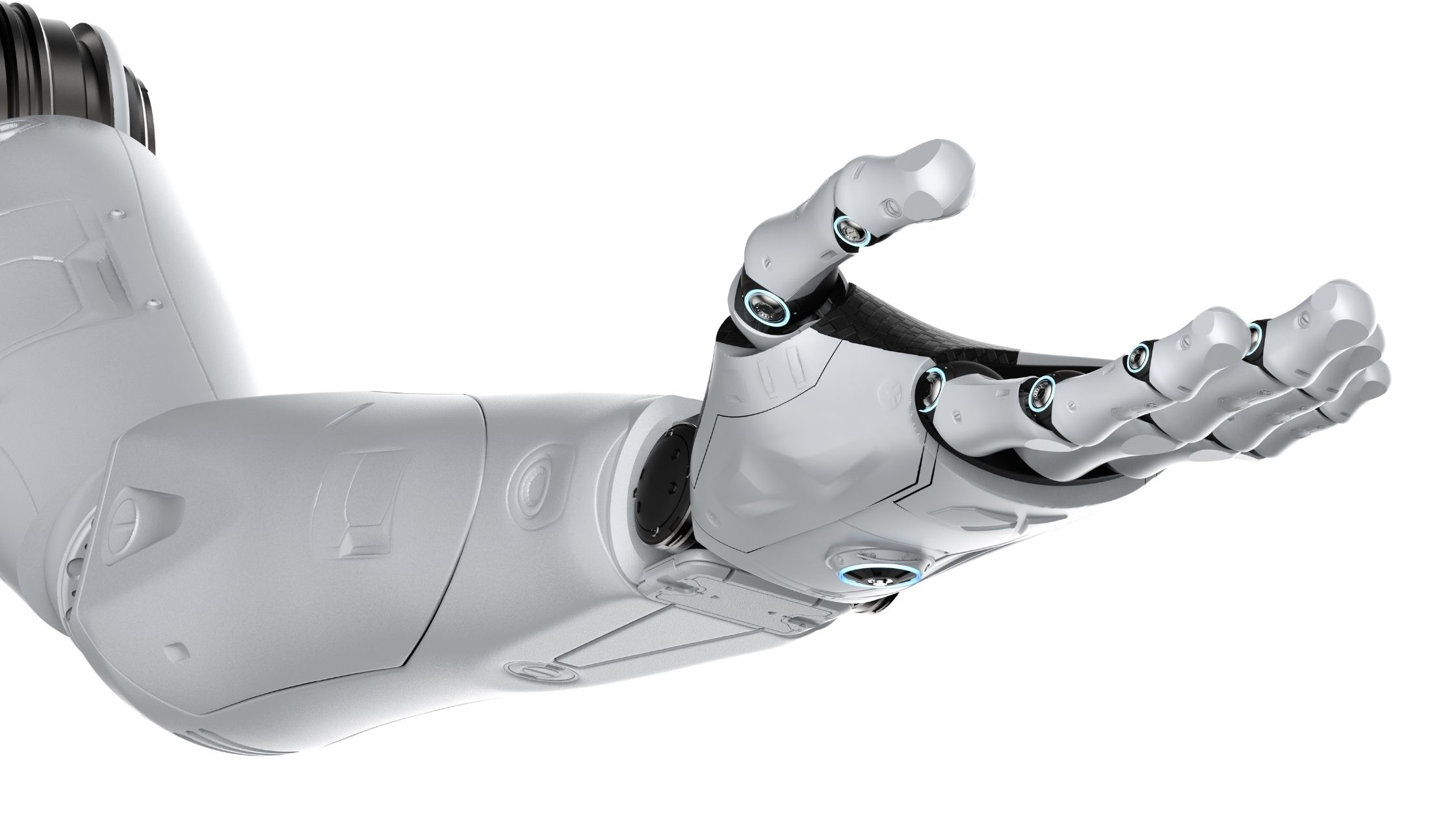
Most industrial robots in Singapore can move a payload from point A to point B. Far fewer can actually feel what they’re holding — adjust grip pressure on a fragile component, sense a part slipping mid-transfer, or perform the kind of fine in-hand manipulation a human hand does without thinking. That’s the gap a robot hand in Singapore is built to close, and it’s why manufacturers, electronics assemblers, and logistics operators are increasingly looking past simple two-finger grippers toward genuinely dexterous robotic hands.
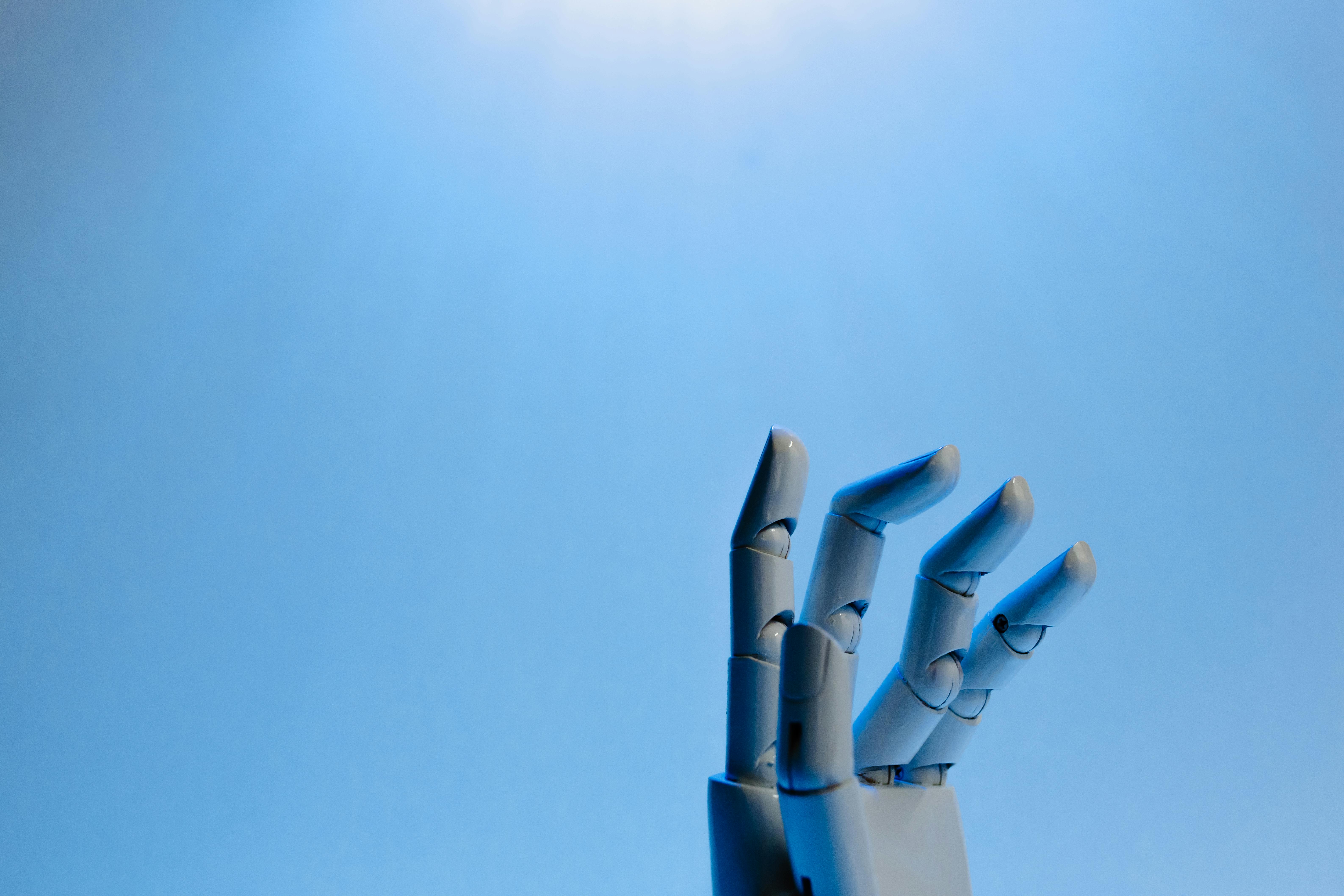
A dexterous robotic hand adds fine motor control and tactile feedback that standard grippers can’t replicate.
This guide walks through what a modern robot hand actually offers over a standard gripper, the Linker Hand series available through Collie in Singapore, where it fits into real industrial use cases, and what to check before bringing one into your operation.
What Makes a Robot Hand Different From a Standard Gripper
A conventional industrial gripper — two rigid jaws opening and closing — works fine for picking up a uniform box or clamping a fixed-shape part. It struggles the moment a task requires anything closer to human dexterity:
- Variable-shape or delicate objects — a rigid gripper either crushes a soft item or fails to secure an irregular one
- In-hand manipulation — reorienting a part after picking it up, without setting it down and re-gripping
- Force-sensitive tasks — knowing exactly how much pressure is being applied, and adjusting in real time if a part starts to slip
- Fine assembly work — threading a component, seating a connector, or handling small electronics parts that need sub-millimetre precision
A genuine dexterous robotic hand, by contrast, uses multiple independently actuated fingers, tactile sensing across the fingertips, and force feedback to handle exactly these situations — closer to how a human hand adapts its grip on the fly.
The Linker Hand Series: What’s Actually Available Through Collie in Singapore
Collie brings the Linker Hand range into Singapore as an evaluated, integrated, and fleeted hardware option — not a one-off import, but a product line with local enterprise support. The range spans from lightweight lab-grade hands to a flagship surgical-precision model:
| Model | Degrees of Freedom | Weight / Payload | Best Fit |
|---|---|---|---|
| Model 06 | 6 Active DOF | 360g chassis | Lightweight payloads, lab research, educational humanoid platforms |
| Model L6 | 5x 3D tactile finger sensors | 8.5 kg continuous grip force | Industrial-grade precision gripping, continuous factory duty cycle |
| Model L20 Lite | High-speed bionic manipulator | 480g, 5.0 kg max payload | Dynamic bipedal arm integration, 120ms full flexion sweep |
| Model L20 | 20 Independent DOF | Teleop-ready | Foundation model imitation learning, complex in-hand tool manipulation, sorting |
| Model 030 | High-torque metallic research hand | 25 kg heavy grip payload | Heavy-duty handling, IP64 splash-resistant industrial environments |
| Model L30 (Flagship) | 30 Independent DOF | 3D dynamic tactile matrix | Sub-millimetre precision, surgical-grade and complex manipulation tasks |
Across the range, the shared architecture includes sub-5ms latency response, a 3D matrix tactile array for slip and pressure sensing, and native ROS 2 / C++ integration through Collie OS — meaning the hand isn’t a standalone gadget, it plugs into the same intelligence layer running Collie’s access control, video analytics, and IoT modules.
Where a Robot Hand Fits in a Singapore Operation

Precision manufacturing is where dexterous robot hands typically deliver the clearest ROI — fine assembly work that a rigid gripper can’t handle reliably.
Precision Manufacturing and Electronics Assembly
Singapore’s electronics and precision manufacturing sector is the clearest fit — small components, tight tolerances, and delicate parts are exactly what a tactile-sensing hand is built for. The higher-DOF models (L20, L30) support sub-millimetre accuracy for assembly tasks that would otherwise need a dedicated fixture or a human operator.
Healthcare and Life Sciences Handling
Sample handling, lab automation, and delicate instrument manipulation benefit from the same tactile precision — particularly the flagship L30’s surgical-grade accuracy and 3D slip perception, where dropping or crushing a sample isn’t an option.
Logistics and Sorting
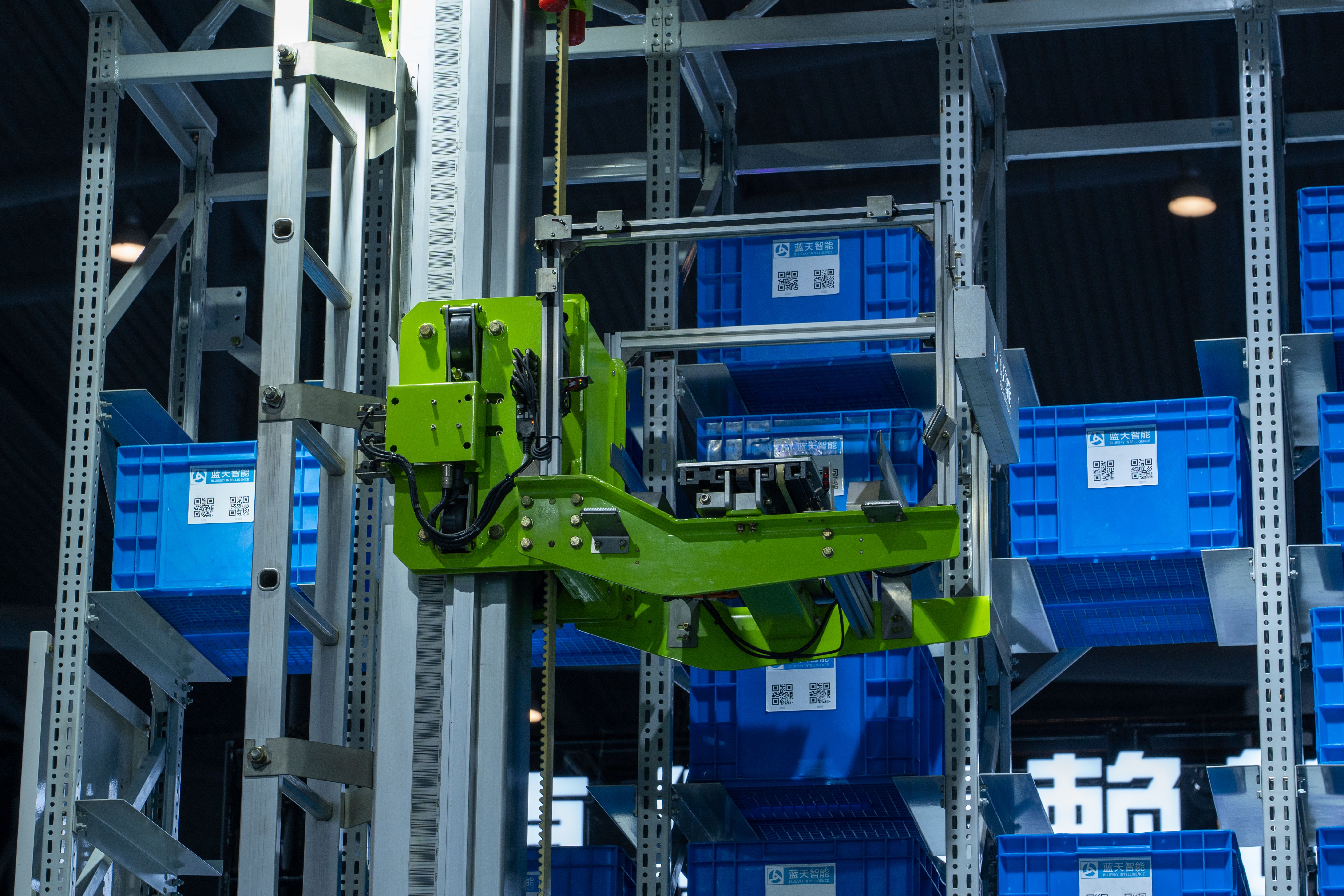
Mixed-item sorting in logistics is a strong use case for dexterous hands, where object shapes and sizes vary far more than a rigid gripper can reliably handle.
Warehouses and fulfilment centres handling mixed, irregularly shaped items get more reliable pick rates from a dexterous hand than a fixed two-finger gripper, which tends to fail on anything outside a narrow shape range.
Teleoperation: How These Hands Get Trained
A dexterous hand is only as good as the data and control behind it, which is why the Linker range includes a teleoperation and data-collection layer alongside the hands themselves:
- LinkerGloves — motion capture gloves with millisecond tactile feedback and 18-point bend curvature tracking, used to puppet the hand directly from an operator’s own hand movements
- Half-body MoCap rig — an ergonomic counterbalance teleoperation rig for full upper-body kinematic synchronisation
- In-house Arm — a multi-axis collaborative arm with torque feedback and zero-backlash harmonic gearheads, native to ROS 2
- Data Collection Kit — a turnkey dual master-slave teleoperation workstation for capturing high-fidelity demonstration data used to train imitation-learning and foundation models
For operations exploring AI-driven automation rather than just fixed-motion robotics, this teleoperation layer is what turns a physical hand into a system that can actually learn new tasks from demonstration.
Compatibility: Does a Linker Hand Work With Your Existing Robot?
This is usually the first question an automation engineer asks, and the answer is generally yes. Linker Hands use universal mechanical flange mounts, native ROS 2 Humble/Iron packages, and standard URDF/MuJoCo/Isaac Gym assets — meaning they’re built to mount onto existing platforms rather than requiring a proprietary robot body. Confirmed compatibility includes Unitree, LimX Dynamics, Casbot, and Fourier GR-1 humanoids, plus standard collaborative robot arms already running in most factories.
Within Collie’s own robot fleet, that means a Linker Hand can be paired with the LimX robot dog or Casbot humanoid chassis for tasks that need manipulation on top of mobility, or run on Collie’s dedicated XinBaidong Arms Bot for fixed-position assembly and inspection work.
What to Check Before Choosing a Robot Hand Vendor in Singapore
- Does it mount on the robot platform you already run, or does it lock you into a specific chassis?
- What’s the actual grip force and payload for your specific task — a 360g lab hand and a 25kg industrial gripper solve very different problems.
- Is tactile sensing genuinely usable, or just a marketing spec — ask for real slip-detection and force-feedback demonstrations on your own parts.
- Is there a path to teleoperation and data collection if you plan to train task-specific behaviours, rather than only running pre-programmed motions?
- What’s the local support and warranty — hardware failures on a production line are costly, so confirm turnaround time for repairs or replacement, not just the warranty period on paper.
Frequently Asked Questions
What’s the difference between a robot hand and a standard robotic gripper?
A standard gripper typically has two rigid jaws for a simple open/close grip. A dexterous robot hand has multiple independently actuated fingers with tactile sensing, enabling in-hand manipulation, variable grip force, and handling of irregular or delicate objects that a rigid gripper can’t manage reliably.
Can a Linker Hand be added to a robot arm I already own?
In most cases, yes. Linker Hands use universal mechanical flange mounts and standard ROS 2 / URDF integration, and are confirmed compatible with Unitree, LimX Dynamics, Casbot, Fourier GR-1 humanoids, and standard collaborative robot arms.
Do I need the flagship L30 model, or would a smaller hand work?
It depends on the task. Lighter models like the Model 06 or L20 Lite suit lab work, education, or lightweight dynamic integration, while the L30’s 30-DOF and surgical-grade precision are built for complex manipulation and sub-millimetre accuracy tasks — most industrial buyers don’t need the flagship spec by default.
See the Linker Hand Range in Detail
If fine manipulation, delicate part handling, or in-hand assembly work is a bottleneck a standard gripper can’t solve, it’s worth seeing the full Linker Hand specification sheet and discussing which model actually fits your task.
Explore the full Linker Hand Series on Collie →
See all Collie robot chassis options →