
Choosing the right access control system in Singapore is harder for a construction site than for a typical office. You’re not managing 50 employees who badge in once a day you’re managing hundreds of workers, multiple subcontractors, foreign work permit holders, delivery drivers, and site visitors, often across several restricted zones, all while staying compliant with MOM safety rules and PDPA data protection requirements.
If you’re a contractor, developer, or facilities manager evaluating vendors right now, this guide walks through exactly what to look for — from hardware choice to compliance to whether a standalone system is even the right call anymore.
Why Construction Sites in Singapore Need a Purpose-Built Access Control System
Standard office access control assumes a stable, known workforce. Construction sites break that assumption in almost every way:
- High worker turnover — subcontractor crews rotate weekly or even daily depending on the project phase.
- Mixed workforce types — direct hires, subcontracted labour, work permit holders, and short-term specialists all need different access rules.
- Multiple restricted zones — hoisting areas, confined spaces, live electrical rooms, and height-work zones need tighter control than the general site perimeter.
- Emergency accountability — in a fire or incident, site management must produce an accurate, real-time headcount of everyone on site, including visitors.
- Harsh site conditions — dust, gloves, mud, and outdoor exposure affect how reliably certain access hardware performs.
A generic office door reader simply wasn’t designed for this. That’s why most Singapore contractors evaluating a new system are really asking for a worker management system for construction, not just a door lock.
Key Requirements for a Construction Worker Management System
Before comparing vendors or hardware, it helps to define what “good” actually looks like on a live site. At minimum, the system should cover:
1. Real-Time Worker Tracking
Every entry and exit — for every worker, every subcontractor, every day — logged automatically and viewable live, not reconciled at month-end. This is what makes an accurate emergency headcount possible.
2. Visitor and Subcontractor Pass Management
Short-term visitors (auditors, inspectors, suppliers) need a fast, temporary credential that expires automatically, without manual card issuance or a guard writing names in a logbook.
3. Integration with Attendance and Payroll
On most Singapore sites, access data and attendance data should be the same data. If your access control system can’t feed directly into attendance and payroll, you end up manually reconciling two systems — a common source of disputes over man-hours and levy calculations.
4. Zone-Based Restrictions
Not every worker should be able to enter every area. A worker management system needs to support tiered access — general site, high-risk zones, and restricted machinery or storage areas — tied to individual competency or permit status.
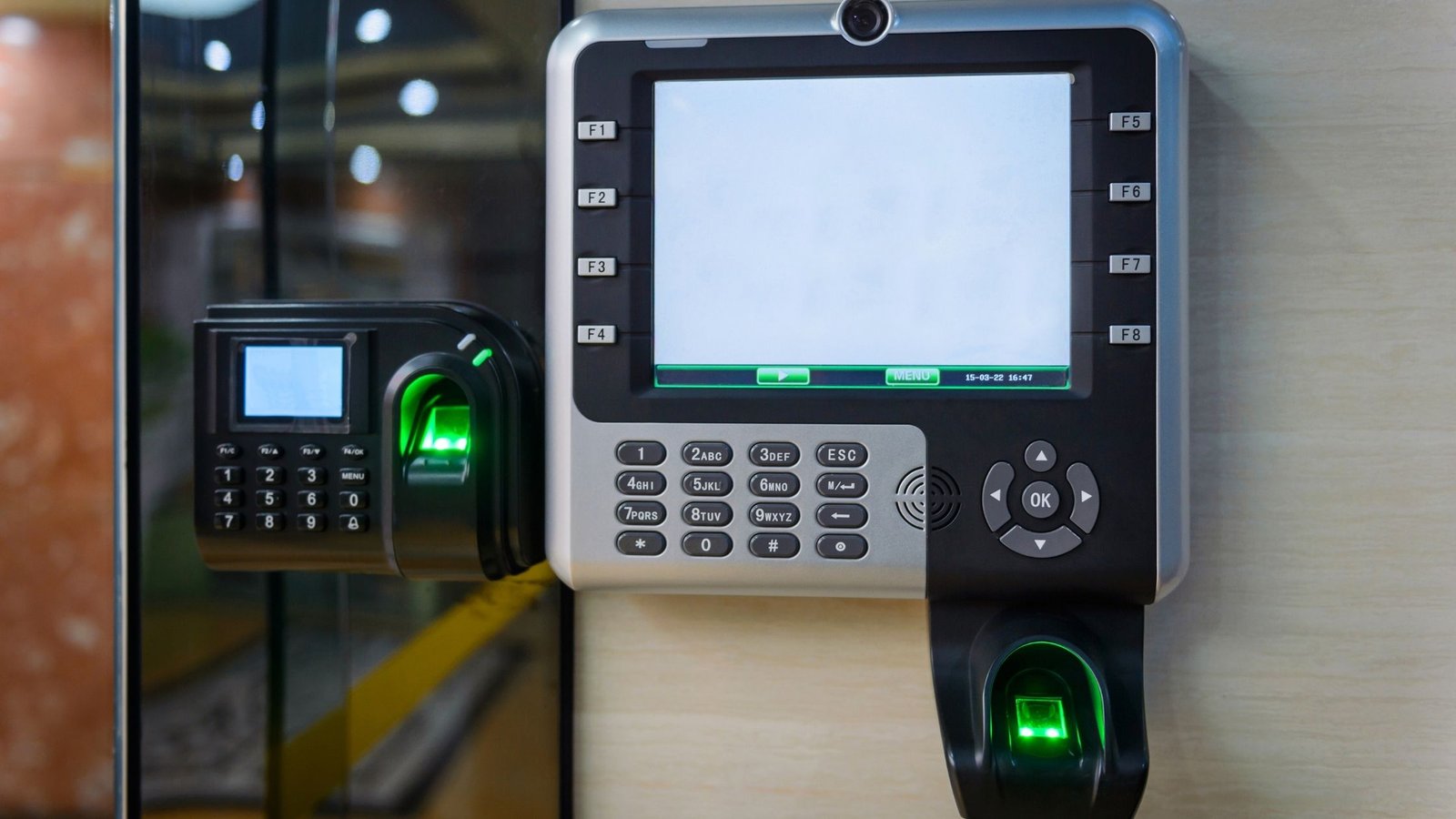
Card vs Biometric vs Facial Recognition: Which Fits a Construction Site?
This is usually where buyers get stuck, because each method has real trade-offs on a live site — not just in a showroom.
| Method | Strengths | Weaknesses on Site | Best Fit |
|---|---|---|---|
| Card / RFID | Cheap, fast, tolerant of dust and gloves | Cards get lost, shared, or lent between workers — a real integrity risk for headcounts | Low-risk general zones, large workforces on tight budgets |
| Fingerprint Biometric | No cards to lose, ties access to a specific individual | Dirt, cuts, calluses, and wet gloves reduce read accuracy in outdoor conditions | Controlled indoor checkpoints, smaller crews |
| Facial Recognition | Contactless, fast throughput at busy entry points, hard to share or fake | Needs good camera placement/lighting; higher upfront cost | Main site entry/exit gates, high-traffic checkpoints, PPE/helmet compliance checks |
In practice, most Singapore construction sites end up running a hybrid setup: facial recognition at the main gate for speed and accountability, with card or biometric readers at internal restricted zones. The mistake to avoid is picking one method for the entire site before mapping it against your actual choke points and worker volume.
Compliance Checklist: PDPA and MOM Requirements for Site Access Control
Any access control system that touches worker data on a Singapore construction site needs to satisfy two separate compliance obligations — and it’s worth checking both before you sign a contract.
PDPA (Personal Data Protection Act)
- Biometric data (fingerprints, facial templates) is personal data — workers must be informed and, in most cases, give consent before enrolment.
- Data should only be used for the stated purpose (access/attendance), with reasonable security arrangements around storage and retention.
- Vendors should be able to explain, in plain terms, where biometric data is stored and how long it’s retained after a worker leaves site.
MOM Workplace Safety and Health (WSH) obligations
- Employers carry a general duty to ensure the safety of everyone on site, which in practice means being able to account for every person present at any moment — not just at shift start.
- Foreign work permit holder records (tied to WPOL) should be reconcilable against who is physically on site, particularly during audits or after an incident.
- An accurate, real-time headcount materially affects how fast a site can execute an emergency evacuation procedure.
A vendor quote that doesn’t address both of these directly is worth a follow-up question before you commit.
Why an Integrated Platform Beats a Standalone Access Control System
Here’s the part most buyer’s guides skip: access control on its own solves entry and exit. It doesn’t solve site safety monitoring, doesn’t catch a worker without a helmet, and doesn’t track equipment or environmental conditions. On most sites, those get bought as separate systems from separate vendors different dashboards, different logins, no shared data.
This is where Collie’s Access Control Management is built differently. Rather than a standalone door system, access control runs as one module inside a single Collie platform that also covers:
- Attendance & On-Site tracking, so entry logs and man-hour records live in one place
- Worker, Staff & Visitor Management, so subcontractor and visitor passes are issued and expired automatically
- AI Video Analytics — no-helmet detection, human intrusion, and crowd detection — running on the same dashboard, so a safety breach and an access breach show up in the same view
- IoT sensors for equipment and environmental monitoring across the site
For a construction site specifically, that combination matters more than the access hardware itself: one login for the site manager, one audit trail for MOM or an insurer, and no reconciliation between systems that were never designed to talk to each other.
What to Look for When Choosing a Vendor
If you’re shortlisting vendors this quarter, a few questions separate a good long-term fit from a system you’ll outgrow in a year:
- Can it scale with subcontractor churn? Ask how fast a new subcontractor crew can be onboarded and offboarded.
- Does it integrate, or does it sit alone? Confirm whether attendance, visitor management, and video analytics can run on the same platform — or whether you’ll be paying for and managing three separate systems.
- Can it grow into AI and robotics later? Sites investing in video analytics now are increasingly looking at autonomous patrol (robot dogs, ANPR at vehicle gates) as a next step. A platform that already supports this avoids a full re-platform later.
- Is local compliance built in, not bolted on? PDPA consent flows and MOM-aligned headcount reporting should be part of the base system, not a customisation request.
- What happens after installation? Confirm local support response times — a site with a down access system at the main gate is a safety and productivity problem, not just an inconvenience.
Ready to Simplify Access Control on Your Site?
An access control system is only as useful as what it connects to. If you’re evaluating options for a Singapore construction site, it’s worth seeing how access, attendance, visitor management, and safety monitoring can run on a single platform instead of three separate ones.
Explore Collie’s Access Control Management → See how Collie works for Construction sites →