Smart Construction Site Monitoring in Singapore: How IoT Sensors and AI Cut Safety Incidents and Delays
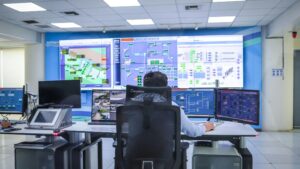
Most construction firms in Singapore aren’t short on data — they’re short on real-time data. Site diaries, safety checklists, and progress reports are usually compiled hours or days after the fact, by which point a delay has already happened or an incident has already occurred. Smart construction site monitoring in Singapore closes that gap by connecting IoT sensors, AI video analytics, and access control into one live view of the site — not a system you check at the end of the day, but one that flags problems as they happen.
This matters more than ever with BCA pushing Integrated Digital Delivery (IDD) as the industry standard and MOM tightening expectations around proactive safety management. If you’re a project director or operations lead evaluating how to digitalise your site, here’s what a modern monitoring setup actually covers, and how it differs from generic project management software.
Why “Digital Construction Site” Doesn’t Mean Project Management Software
Search for construction digitalisation in Singapore and you’ll mostly find BIM tools, Gantt chart platforms, and ERP systems for budgets and procurement. Those solve a real problem — but they answer “what’s the plan and the paperwork,” not “what’s physically happening on site right now.”
Smart construction site monitoring is a different layer entirely — it’s the sensors, cameras, and access points on the physical site itself, feeding live data instead of end-of-day reports. It answers questions like:
- Is a restricted zone being entered right now, by someone who shouldn’t be there?
- Are noise, dust, or vibration levels on this site currently within permitted limits?
- Is every worker on site wearing a helmet in a high-risk zone, right now?
- How many workers and vehicles actually entered site today, without anyone manually counting?
None of that comes from a Gantt chart. It comes from IoT sensors and AI video analytics deployed directly on the physical site.
The Core Components of a Smart Construction Site
1. IoT Environmental & Structural Sensors
Sensors monitoring noise, dust, vibration, and structural movement give a continuous, logged record — useful both for regulatory compliance (many sites face permitted limits on noise and dust near residential areas) and for catching early warning signs of structural issues before they become safety incidents.
2. AI Video Analytics for Safety
Camera-based detection for no-helmet entries, unauthorised zone intrusion, loitering, overcrowding, and early smoke signs — running on existing CCTV rather than requiring new camera infrastructure. Instead of a safety officer reviewing footage after an incident, alerts fire in real time.
3. Access Control and Worker Management
Real-time entry/exit tracking for direct hires, subcontractor crews, and visitors — feeding directly into attendance so man-hours and headcount are accurate without manual reconciliation, and so an emergency evacuation count is accurate to the minute, not the morning.
4. ANPR for Vehicle and Material Deliveries
Automatic number plate recognition at site gates logs every vehicle entry and exit without a guard manually noting plate numbers — useful for material delivery tracking, contractor vehicle management, and reducing gate congestion during peak delivery hours.
Each of these can technically be bought as a separate point solution. The problem is that separate solutions produce separate dashboards, separate logins, and no single record of what actually happened on site on a given day.
Why This Matters for BCA IDD and MOM Compliance
Singapore’s Building and Construction Authority has been pushing Integrated Digital Delivery as the direction the industry is expected to move toward — away from manual, paper-based site records and toward connected, real-time data across a project’s lifecycle. A physical monitoring layer feeding live sensor and access data directly supports that direction, rather than treating digitalisation as a back-office paperwork exercise.
On the safety side, MOM’s Workplace Safety and Health Act places a general duty of care on employers to proactively identify and control hazards — not just report incidents after they happen. A monitoring system that logs every zone intrusion, every helmet violation, and every environmental reading gives a site a defensible, timestamped audit trail if MOM ever asks how a hazard was being managed before an incident occurred.
The ROI Case: Fewer Delays, Fewer Incidents, Less Manual Reporting
The business case for site monitoring usually comes down to three things project directors actually track:
- Reduced incident response time — an automated alert reaching a supervisor in real time, instead of a hazard being discovered on the next scheduled walk-through.
- Fewer disputes over man-hours and delays — when attendance, access, and vehicle logs are automatic and timestamped, there’s no manual reconciliation and no argument about who was on site and when.
- Less time spent compiling reports — site diaries and safety reports that used to take a supervisor an hour a day to compile manually are pulled directly from logged sensor and access data instead.
None of these show up as a single dramatic number — they show up as a site that runs with fewer surprises and less administrative drag, which is exactly the case most operations leads need to make internally before signing off on a digitalisation budget.
One Platform, Not Five Separate Systems
This is the practical difference between buying point solutions and buying a platform. Collie’s Construction solution runs IoT sensors, video analytics, access control, attendance, and ANPR on one dashboard — so a helmet violation, a zone intrusion, and a delivery vehicle entry all show up in the same place your site management team already checks, instead of three or four disconnected apps with three or four separate logins.
For a multi-contractor site with constant workforce churn, that single source of truth is often worth more than any individual sensor — it’s the difference between a real-time operational view and a pile of disconnected data that someone still has to manually stitch together at the end of the day.
What to Check Before Digitalising Your Site
- Does it run on your existing CCTV and gate infrastructure, or does it require a full hardware replacement?
- Do access, attendance, and video analytics data live in one dashboard, or will your team still be pulling logs from separate systems?
- Can it scale as subcontractor crews rotate, without a lengthy onboarding process for every new vehicle or worker?
- Does it produce a usable audit trail for BCA IDD reporting and MOM safety reviews, or just raw footage someone has to review manually?
- Can it extend to ANPR or robotic patrol later, without needing a separate platform down the line?
Frequently Asked Questions
Is smart construction site monitoring different from BIM or project management software?
Yes. BIM and project management software plan and document the project on paper and in models. Smart site monitoring is the physical layer — sensors, cameras, and access points on the actual site — that captures what’s happening in real time, which then feeds into the reporting and compliance side.
Does smart site monitoring help with BCA Integrated Digital Delivery (IDD) requirements?
It supports the direction BCA’s IDD framework is pushing the industry toward — connected, real-time data over manual paper records — though IDD submission requirements themselves cover the broader project data ecosystem, not monitoring alone.
Do I need new cameras and sensors, or can I use what’s already on site?
In most cases, AI video analytics can run on existing CCTV if resolution and placement are adequate. New IoT sensors (noise, dust, vibration) are typically added where none currently exist, since they measure things cameras can’t.
See What a Connected Site Looks Like
If you’re weighing up a digitalisation budget for your next project, it’s worth seeing how access control, video analytics, attendance, and vehicle tracking can run on one dashboard instead of several disconnected systems.
Explore Collie’s Construction solution →
See Collie’s Video Analytics in detail →
See Collie’s Access Control Management in detail →