Industrial sites are becoming more complex.
A typical facility may have permanent employees, contractors, visitors, forklifts, machinery, vehicles and critical assets moving across multiple zones every day.
At the same time, safety teams need to monitor PPE compliance, security teams need to control access, operations teams need visibility of assets, and management needs reliable information when an incident occurs.
The problem is that these activities are often managed through separate systems.
Access control may operate independently from CCTV. Asset tracking may sit in another platform. PPE checks may depend on manual inspections. Incident investigation may require teams to collect information from different sources.
For industrial companies in Singapore, this creates a critical question:
How can you improve industrial site security without adding more disconnected systems?
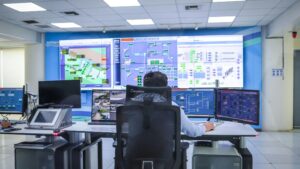
The answer is moving toward an integrated approach combining AI, IoT, access control, video analytics and real-time site monitoring.
Why Industrial Site Security Is Becoming More Complex
Industrial facilities are not static environments.
People move between production floors, warehouses, loading bays and restricted areas. Equipment changes location throughout the day. Contractors may enter only for specific projects. Visitors need temporary access.
This creates several challenges.
More People, More Access Points
Industrial facilities may have different access requirements for:
- Employees
- Contractors
- Visitors
- Vendors
- Temporary workers
- Maintenance teams
Giving everyone the same access is not practical.
Each user group may require different permissions based on their role, location and assignment.
More Assets to Monitor
Industrial sites can contain expensive and mobile assets such as:
- Forklifts
- Tools
- Production equipment
- Mobile machinery
- Vehicles
- Materials
When asset locations are not visible in real time, employees can spend significant time searching for equipment.
Safety Rules Must Be Followed Beyond the Gate
Checking whether workers wear PPE at the entrance is not enough.
A worker may enter the site wearing a helmet but remove it after reaching a production area.
This is why industrial safety monitoring needs to extend beyond access points.
Incidents Require Multiple Sources of Information
When an incident occurs, teams may need to answer:
- Who was on site?
- Who entered the area?
- Which vehicle was nearby?
- Where was the equipment?
- Was PPE being used?
- What happened before the incident?
- Which camera captured the event?
If each piece of information exists in a different system, investigation can take longer.
The Shift from Traditional Security to Smart Industrial Site Security
Traditional industrial security often depends on a combination of:
Security guards + CCTV + access cards + manual inspections + spreadsheets
These tools still have value.
However, they may operate independently.
A smart industrial site takes a different approach.
Instead of simply collecting data, the site connects multiple sources of information so teams can obtain a clearer picture of what is happening.
For example:
Access Control + AI Video Analytics + IoT Sensors + Asset Tracking + Site Monitoring
can create a more connected operational environment.
This does not mean removing people from the process.
Instead, technology can help security, HSE and operations teams focus their attention where it matters most.
5 Technologies Transforming Industrial Site Security in Singapore
1. Smart Access Control
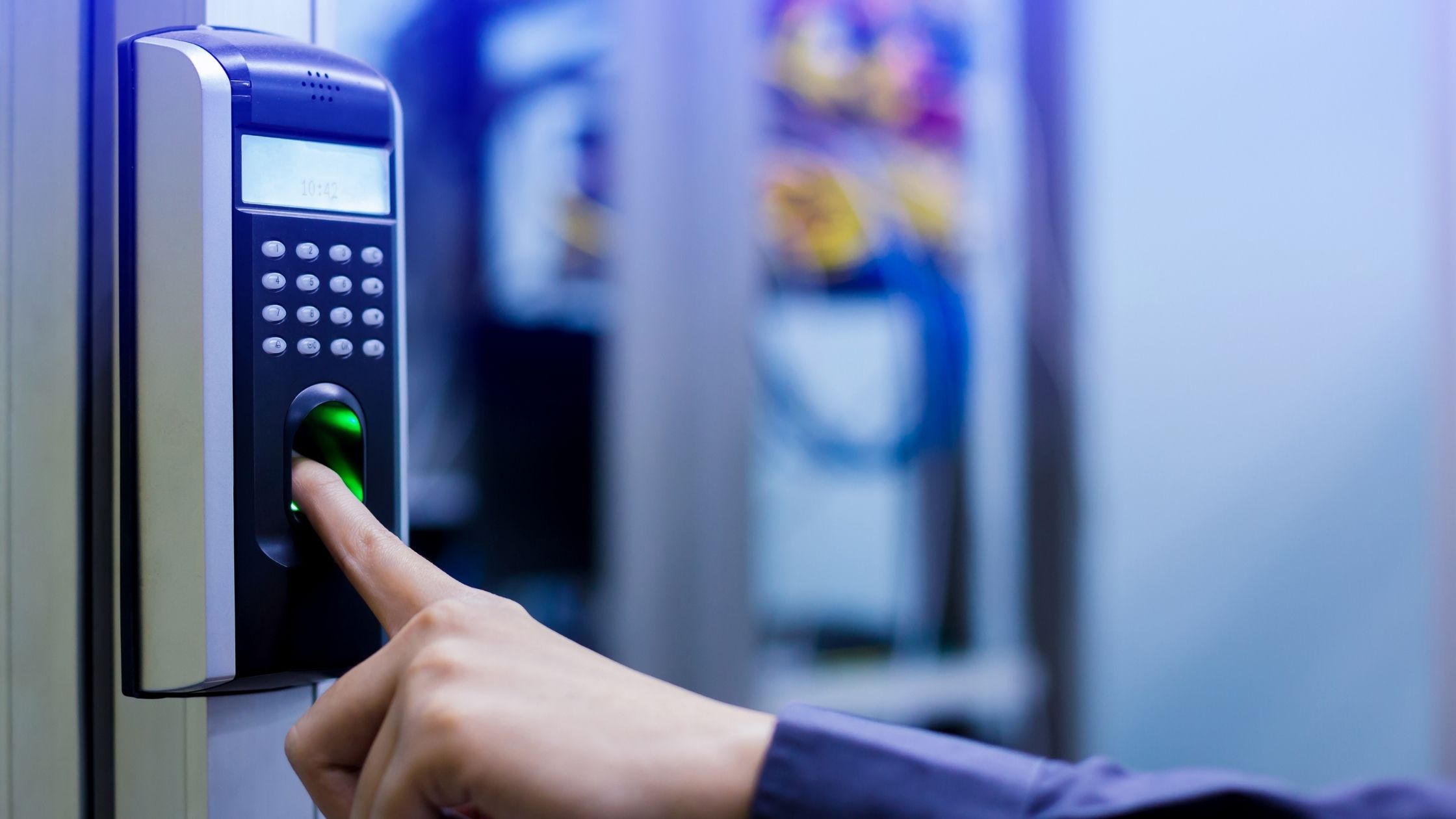
Access control is the first layer of industrial site security.
A modern system should do more than unlock a door.
It should help organisations determine:
Who is entering?
Where are they authorised to go?
When did they enter?
When did they leave?
Is their access still valid?
Smart access control can support different registration and approval workflows for employees, contractors and visitors.
Access permissions can also be grouped by project, department, location or assignment.
This makes access management more structured while creating a searchable history of site entry and exit.
2. AI-Powered PPE Monitoring
PPE compliance is one of the most important safety considerations in industrial environments.
But manual monitoring has a limitation:
People cannot watch every worker on every shift.
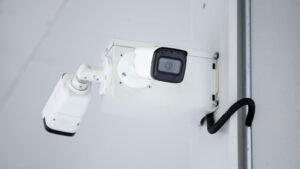
AI video analytics can help extend the coverage of existing cameras.
For example, AI-powered no-helmet detection can identify potential PPE non-compliance from camera feeds and flag it for attention.
Instead of relying entirely on occasional spot checks, safety teams can receive more consistent visibility of PPE compliance.
The goal is not to replace safety professionals.
It is to help them identify potential issues faster.
3. Asset and Personnel Tracking
Knowing where people and equipment are can significantly improve operational visibility.
Asset and personnel tracking can help companies monitor:
- Forklift locations
- Equipment movement
- Personnel locations
- Asset utilisation
- Movement across designated areas
This can reduce the time employees spend searching for missing equipment.
More importantly, location data can become useful during incident investigation.
For example, if an incident involves a forklift, teams may need to understand where the vehicle was operating and who was nearby.
Having access to location information can provide additional context
4. Environmental and Equipment Monitoring
Industrial environments can change throughout the day.
Air quality, equipment conditions and other environmental factors may need continuous monitoring.
IoT sensors can provide data from areas where manual checks are difficult to perform continuously.
Depending on the use case, industrial IoT can support monitoring of:
- Air quality
- Equipment conditions
- Personnel
- Assets
- Environmental parameters
The value comes from turning physical conditions into data that teams can monitor and act on.
5. Robots for Areas That Are Difficult or Risky to Access
Fixed cameras and sensors cannot cover every location.
Some industrial areas may be:
- Hazardous
- Restricted
- Remote
- Difficult to wire
- Large or constantly changing
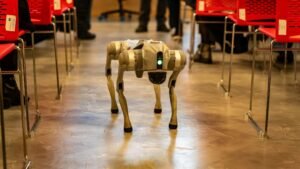
Mobile robots can extend monitoring beyond fixed infrastructure.
Robotic platforms can be used for applications such as patrol, inspection, material handling and data collection.
Collie’s industrial-site solution also connects its robot fleet with the broader site infrastructure, allowing robots to operate within the same access ecosystem rather than becoming another isolated system.
Ready to Make Your Industrial Site Smarter?
Managing a complex industrial site does not have to mean managing multiple disconnected systems.
With the right combination of AI, IoT, access control, video analytics and robotics, organisations can create a more connected approach to safety, security and operational visibility.
Collie helps industrial sites connect people, assets, safety monitoring and intelligent automation through one integrated platform.
See What Smart Industrial Site Management Could Look Like
Tell Collie about your site, workforce, assets and current challenges.