As a construction site manager, you’re probably all too familiar with the
Use Cases · IoT Sensors
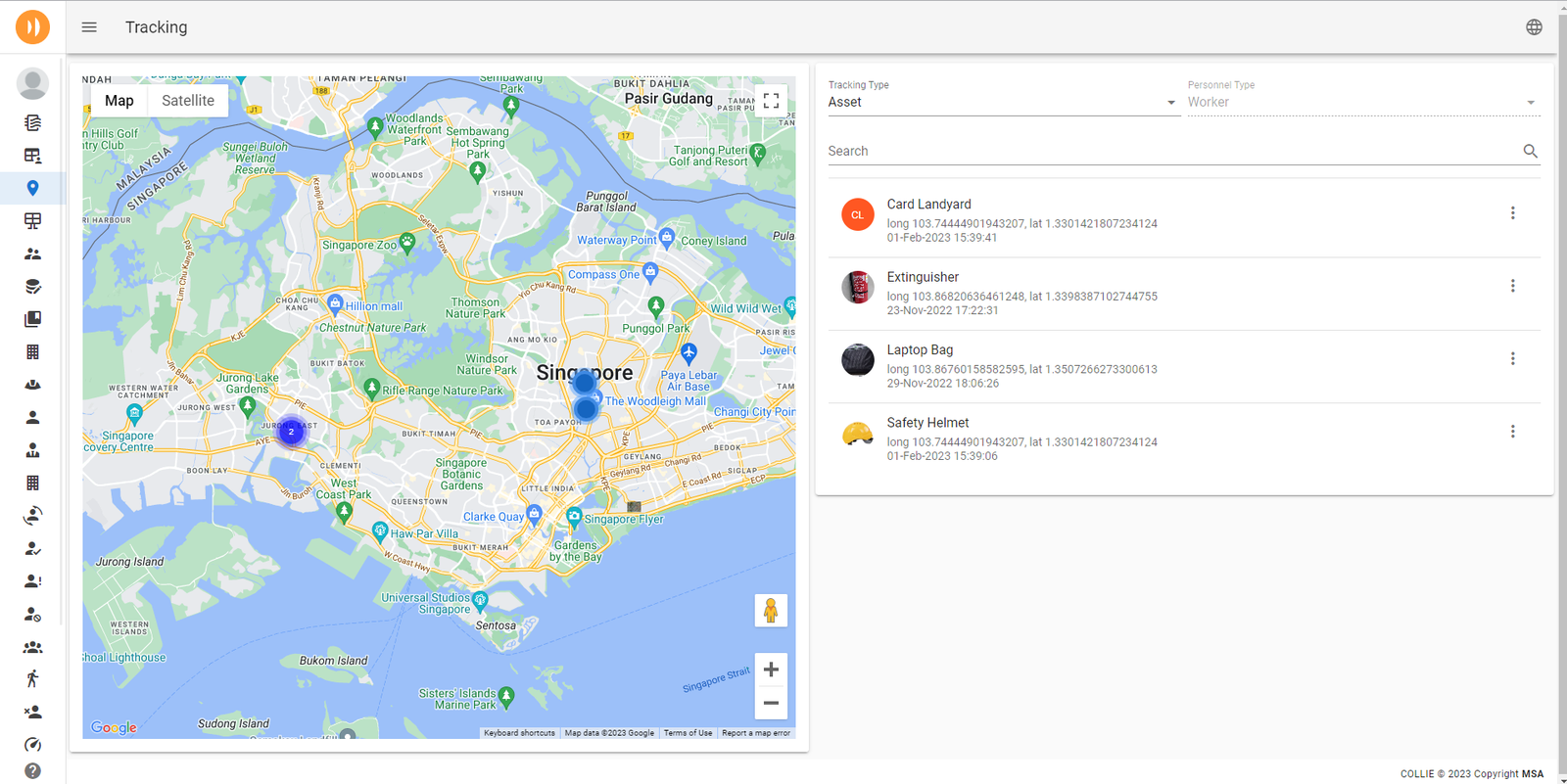
A small BLE beacon, clipped to a fire extinguisher or worn on a lanyard, is enough to know exactly where it’s been. Collie’s beacon network puts every tracked asset and person on a live floor plan, keeps a history of how they moved, and tells you the moment a device needs a new battery.
Why it matters
A misplaced tool, an unaccounted-for worker during an emergency, or a piece of equipment nobody can locate — all solvable with a signal cheaper than a keychain.
Fire extinguishers, tools, and mobile equipment drift from where they’re supposed to be — and searching for them wastes real working hours.
When something goes wrong on site, knowing exactly who’s where — for rescue and recovery — shouldn’t depend on a headcount and guesswork.
Without movement history, there’s no way to see how assets and staff actually flow through a site — data that’s often the key to optimising a warehouse layout.
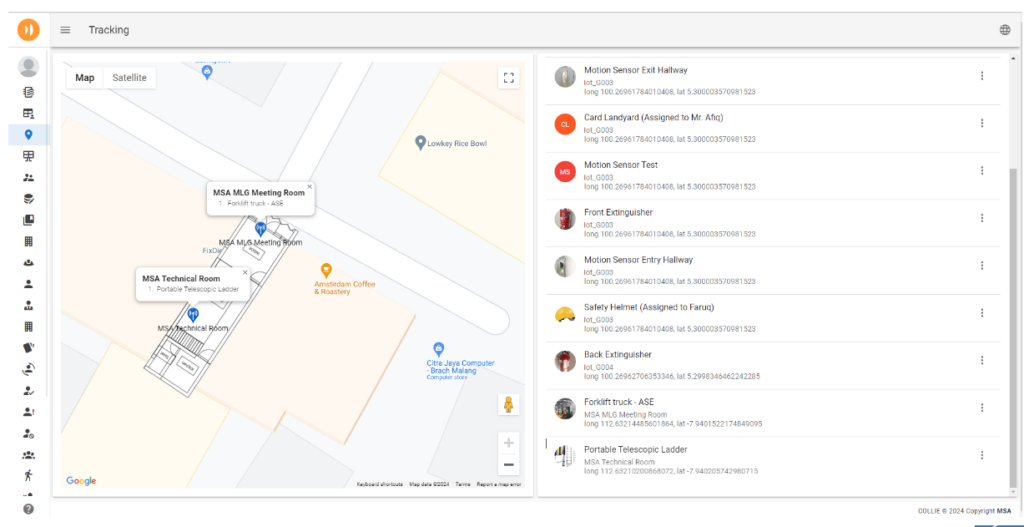
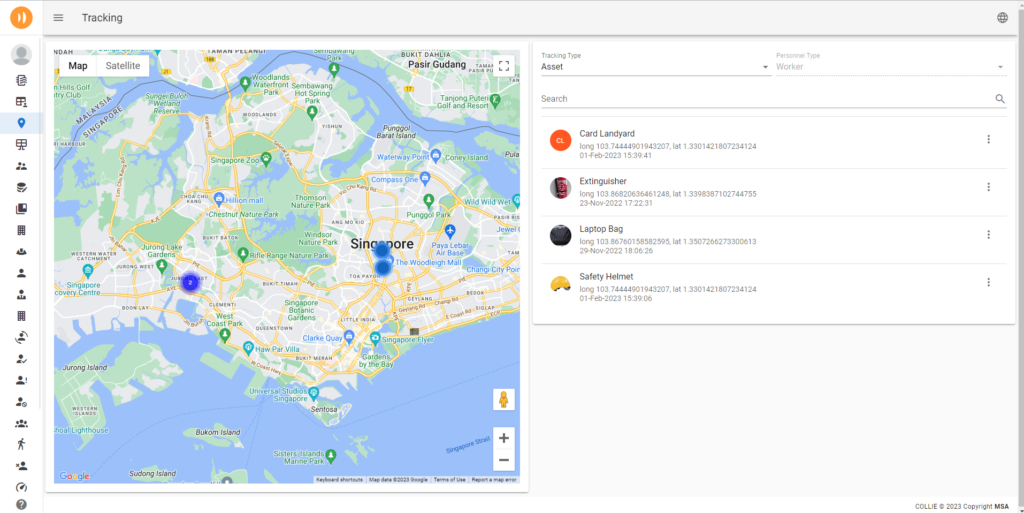
Every tracked beacon appears as a dot on your building’s actual floor plan, positioned in real time using signal strength.
Play back where a person or asset has been over the last hour, day, or week — a trail, not just a dot.
Battery level and last-seen time for every tag, so a dying beacon gets swapped before it goes dark, not after.
Get notified the moment a tracked asset or person enters or leaves a zone they shouldn’t — a restricted area, or simply the building.
Beacon types
Beyond position, different beacons read different things — chosen per asset, not one-size-fits-all.
A basic BLE tag for location — clipped, stuck, or worn, tracked purely by signal strength.
Keychain or card-format tags designed to be carried or worn for continuous personnel tracking.
Accelerometer-equipped beacons that detect strong movement or a fall, and trigger an alert automatically.
Beacons with a temperature or humidity probe, from freezer monitoring to ambient job-site conditions.
Detects a magnetic field to sense whether a door, cabinet, or panel is open or closed.
Detects nearby objects or people at close range — from occupied seats to a bin that’s nearly full.
Detects water leaks or liquid level changes, useful for facilities with sensitive equipment nearby.
Reads dry or wet contact and high/low signals from third-party equipment, feeding them into the same platform.
How it flows
Each beacon broadcasts a signal at a set interval, picked up by nearby gateways scanning continuously.
Signal strength across multiple gateways places the beacon on your floor plan — no GPS needed indoors.
Every position update builds into a movement history, ready to review, export, or replay later.
Beacon tags are inexpensive, battery-powered, and stick-and-forget — some run for years on a single charge, with no wiring and no ongoing maintenance.
MOD.02 · Also on the fleet
Fixed gateways cover fixed floors. A Collie robot on patrol can carry a beacon gateway with it — picking up tagged assets and personnel in aisles, yards, or outdoor areas that a wall-mounted gateway would never reach.
Where it’s deployed
Warehouse asset flow and utilization, tracked to optimize layout and reduce search time.
Critical equipment tracking — infusion pumps, wheelchairs — so nothing is ever “missing”.
Security officer patrol tracking, confirming rounds were actually completed on schedule.
Worker tracking across a site for both safety and rescue & recovery scenarios.
They can operate autonomously or semi-autonomously with human supervision depending on use case.
Yes, our platforms are designed for seamless integration with enterprise systems.
Construction, healthcare, aviation, manufacturing, security, and more.
As a construction site manager, you’re probably all too familiar with the

Collie Personal Protective Equipment (PPE) detection will be show information of workers

Collie Face Detection and Recognition can use to detect and analyze faces
Keeping track of personnel attendance is important to manage your workforce effectively.

Tell us what you need to keep an eye on — people, equipment, or both — and we’ll show you what a beacon deployment would look like.